The post <strong>Interview with the Editors:</strong> Black Speculative Fiction & the Afrodiaspora <em>(forthcoming 2022)</em>
appeared first on .
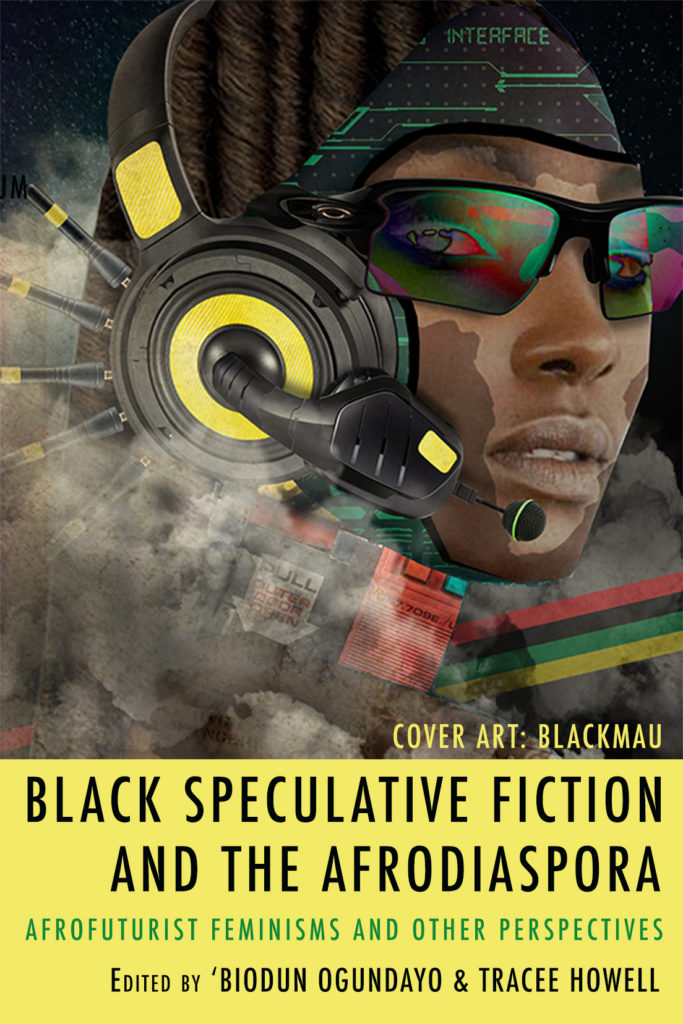
Other Perspectives on Afrofuturism: Interview with the Editors
With this volume coming to fruition, we posed a few questions for its editors, Dr. ‘BioDun Ogundayo and Dr. Tracee Howell.
What does this edited volume explore, in respect to issues and questions around Afrofuturism, feminism, speculative fiction, and other ideas? What interests you in the collection?
‘BioDun Ogundayo: This volume explores themes and theories of Afrofuturism from outside the USA—home of Afrofuturist writings. Essays reflect on a variety of iterations of key Afrofuturism concepts from African, Afro-Caribbean, Afro-Hispanic, and Black feminist perspectives.
Tracee Howell: As ‘BioDun has mentioned, this volume explores how scholars from both within and outside of the United States are engaging with—and expanding upon—contemporary themes and theories of Afrofuturism. As editors, we were especially interested in learning how researchers and teachers might be exploring possible connections among African, Afro-Caribbean, Afro-Hispanic and African-American traditions, mythos and meanings in their work on Black speculative fiction. I’m incredibly excited by the amount of work we received that offers feminist readings and scholarship in response to our call. In fact, what I’ve learned throughout the process of putting this collection together—and what will most impact my own future work and teaching—is truly how bountiful the connections are between contemporary Black feminist perspectives and current works of Afrofuturism, Africanfuturism, and Black speculative fiction in general.
How did you come to Afrofuturism, Black speculative approaches, fiction, arts, in your life and work?
‘BioDun: Teaching African, African American, and Caribbean literature and cinema, interacting with, and mentoring Black youth from across the world. I was struck by the connections between modern African, Afro-Caribbean, and African American literary and spiritual traditions and practices. I then revisited Pan-Africanism as a concept and practice, and it became clear to me that Afrofuturism is a re-imagining, in a more contemporary way, of the epistemolog(ies) of Pan-Africanism that culminate in positive and empowering visions of Global Blackness across all media and art forms. Simply put, and to paraphrase Aimé Césaire, Afrofuturism and Black speculative fiction are a project (globally) to restore Blackness, and to promote Black humanity, especially given the 500-year history of slavery, colonization, and white supremacy. These have consistently denied Black agency; thus, Afrofuturism is ideologically an activist response, or counter-narrative expressed locally but globally relevant and interconnected.
Tracee: In the much same way I came to the study of all literature—I’m a voracious reader. Aren’t we all? In the last, say six or seven years, especially as an American, I’ve been taking solace in science and speculative fiction, re-reading Octavia Butler, and finding my way to N.K. Jemison, and musically/visually, Janelle Monáe. Then, in 2017, several of my colleagues and I arranged for Nnedi Okorafor to come and speak at our campus the following year. In addition to her talk, she very graciously visited my American literature class, and even had dinner with our students, during which she hinted at further adventure for Binti, and discussed TV, film, and graphic novel work in process. She was just terrific and so incredibly generous, and my students were completely dazzled, as were we all. As for me, by the time of her visit I’d already fallen head over heels for Binti, both as a reader and a teacher. I’d inserted the novella into my reading list that semester in honor of her visit, and discovered that its impact was especially significant for first-generation students, who wrote that they were able to see themselves in the character. At dinner with Nnedi Okorafor, to hear those students shyly tell her how personally meaningful they found this story to be, that reading Binti helped them to feel more comfortable on campus—this was one of those all too rare moments of connection that I think we all hope for as college professors. That night I began developing our campus’ first course in Afrofuturism and US literature. Its offering attracted the attention of my friend and colleague ‘BioDun Ogundayo, who oversees our program in Africana Studies, and we began talking about Afrofuturism as an interdisciplinary aesthetic phenomenon, which led to our decision to do an edited collection.
What does Afrofuturism mean to you, as arts, aesthetics, but also praxis, politics, epistemology, in our contemporary moment?
‘BioDun: Afrofuturism to me is the endless opportunities to reaffirm, reshape, (even contest or problematize aspects of Blackness) using the greatest tool that guarantees Black survival: the mind—the capacity to imagine, and then create and recreate, even rearrange aspects of our collective experience to tell the world, in the eternal words of Maya Angelou: “And Still I Rise”. Afrofuturism to me means that Black people, just like our Jewish kin, are always ennobled by soul-killing hate and suffering. Afrofuturism to me is the Middle Passage as the umbilical cord between our glorious past, our unbearable present, and our optimism against dark energies that seek, like in the past, to deny and destroy Blackness. Afrofuturism is the amulet, the talisman, the compass for the Afropolitan and the Afro-optimist against white supremacy, against social death. Afrofuturism, whether as praxis, theory, or aesthetics is not to replace white supremacy with Black supremacy. It is our power to remember, imagine, and create our future, for us, by ourselves. For me, it is remembering with humility and compassion. It is Black anamnesis in opposition to diabolic amnesia.
Tracee: In part, this question is something I explore in my essay within the collection, and of course, the answer for me continues to evolve. But in general, as a literary scholar and teacher rooted in feminism and anti-racism, I see potential for Afrofuturism to help intensify the (too) gradual transformation of the academy away from the sole privileging of white, male Enlightenment perspectives, practices, and processes. As a white academic myself, at the same time I also worry about the whitewashing of Afrofuturism, and a superficial or performative use by white scholars and the primarily white academy. But the time for significant change in the American University is long overdue; we’ve most definitely centered white experience long enough.

Dr. ’BioDun J. Ogundayo is Director of Africana Studies and Associate Professor of French and Comparative Literature at the University of Pittsburgh-Bradford. His latest book, African Sacred Spaces, co-edited with Julius Adekunle, was published by Lexington Press in 2019. He has published essays on slave narratives, African politics, translation theory and practice, Yoruba and African spirituality. His poetry has been published by Daraja Press, Ottawa, and the African American Review. He is fluent in Yoruba (his native tongue), French, English, and Hausa, and holds reading fluency in Spanish, Italian, and some Ghanaian languages.

Dr. Tracee Howell is Assistant Professor of English at the University of Pittsburgh-Bradford. With a background in philosophy and critical theory, Dr. Howell’s scholarly interests include the study of narrative as well as cultural, gender, and media studies. She is strongly committed to anti-racist, intersectional teaching through courses in American literature, Afrofuturism, film, Shakespeare, and gender, sexuality, and women’s studies. She is Program Coordinator for Gender, Sexuality and Women’s Studies, and Director of the Composition Program and Writing Center.
The post <strong>Interview with the Editors:</strong> Black Speculative Fiction & the Afrodiaspora <em>(forthcoming 2022)</em>
appeared first on .
The post Launching Afrofuturist Studies at Lexington Books
appeared first on .

We are pleased to announce the launch of Afrofuturist Studies & the Speculative Arts, a new book series edited by Dr. tobias c. van Veen and Dr. Lonny J. Avi Brooks. The series is published by Lexington Books, a division of Rowman & Littlefield.

Afrofuturist Studies & the Speculative Arts establishes the transdisciplinary study of speculative futures, arts, and approaches that intersect ethnicity, blackness, and indigeneity. Emerging from the social movements and arts of the Afrodiaspora, the speculative themes of Afrofuturism have inspired new perspectives, philosophies, and technologies of decolonization while shaping the evolution of the arts from popular music to science fiction. This series examines the global influence of Afrofuturism from popular culture to political movements, from literature, media, and philosophy to social sciences. We welcome proposals for monographs and edited collections that further our understanding of Afrofuturism, past, present, and future; and that advance the study of speculative futures across disciplines, cultures, and ethnicities. By cultivating rigorous and inventive approaches to scholarship, we encourage critical intersections with African Futurism, Indigenous Futurisms, LatinXfuturism, Sinofuturism, Arabfuturism, Subcontinental, Queer and other speculative futures. This series also seeks to further discourse around decolonizing philosophy and Afrofuturist Studies, from theory to praxis, through remix cultures and speculative design in media, arts, and performance. We are open to diverse perspectives from across the (post)humanities and social sciences, including emergent and radical discourses addressing all aspects of media, sound, literature, culture, ecology, gender, and race.

Dr. Lonny J. Avi Brooks is Associate Professor of Strategic Communication at California State University, East Bay. As a leading voice of Afrofuturism 2.0, Brooks develops an Afrocentric perspective that champions Black storytelling, gaming, and imagination to push beyond the colonial mindset into an expanded vision of possible futures. His research addresses futurism, new media, and race, working with forecasting think tanks, youth groups, and professionals to envision the future of better societies through media and information technologies. Through his work with the Long Term and Futures Thinking in Education Project, the Black Speculative Arts Movement, The Afrofuturist Podcast with Ahmed Best, The Institute for the Future, Fathomers, Dynamicland and others, Brooks aims to diversify and democratize the building of the future.

Dr. tobias c. van Veen is Visiting Professor in Humanities at Quest University, with doctorates in Communication Studies and Philosophy from McGill University. His research addresses philosophy of race, sound, and technology in critical media studies, and he has published widely on Afrofuturism, posthumanism, and electronic dance music cultures (EDMC). Tobias is co-editor of the Afrofuturist Studies & Speculative Arts series at Lexington Books; lead editor of the Black Lives, Black Politics, Black Futures special issue of TOPIA: Canadian Journal of Cultural Studies (2018); editor of the Afrofuturism special issue of Dancecult: Journal of Electronic Dance Music Culture (2013); and co-editor of the special issue Echoes from the Dub Diaspora (2015). Since 1993 tobias has exhibited with galleries and festivals worldwide as an award-winning media/sound artist and curator, photographer and filmmaker, working with the Black Speculative Arts Movement, New Forms Festival, MUTEK, TheUpgradeMTL, The Society for Art and Technology (SAT), the Mobile Digital Commons Network, STEIM, and others. He recently directed the Afrofuturist short film LOST ALIEN (2018), distributed by Cinema Politica, featuring Los Angeles cosplayer ZiggZaggerZ as a photosensitive black alien stranded on a sunlit planet. Lost Alien has been featured by New York Live Arts and the Black Speculative Arts Movement (BSAM) in the exhibitions Curating the End of the World (2020) and Altered-Worlds: Black Utopia and the Age of Acceleration (2021). Tobias hosts the Other Planes: Afro/Futurism Podcast on CreativeDisturbance.org, is creative director of sound-art label IOSOUND.ca, and he DJs vinyl every Friday as pandemixDJs with colleague Dr. Bernardo Attias. An award-winning broadcaster and photojournalist, his creative and professional photography can be found on Instagram @fugitivephilo.
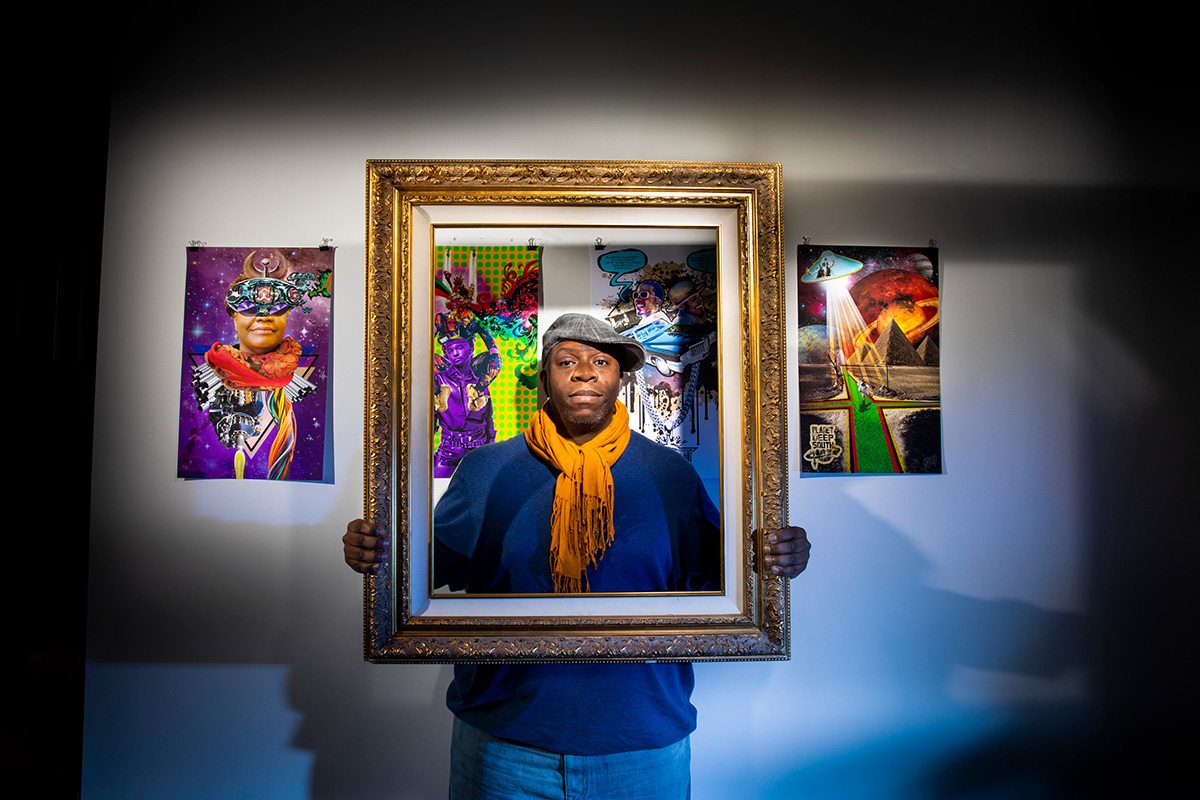
Our site logo and wordmark is by renowned graphics artist and comix illustrator Stacey Robinson (MFA). Robinson is Assistant Professor of Graphic Design at the University of Illinois at Urbana-Champaign and a former Arthur Schomburg Fellow. Robinson says his art pushes the boundaries of celebrating and exploiting Black culture through the use of postmodern appropriation of cultural symbols, blending non-human elements to create a survivalist metaphor. Along with John Jennings, he is part of the collaborative duo Black Kirby, which explores Afro Speculative existence by remixing the comic book aesthetics of artist Jack Kirby. He recently directed “Unveiling Visions: the Alchemy of the Black Imagination” at the Schomburg Center for Research in Black Culture in Harlem, NY, and his work has been featured in publications including the “Black Lives, Black Politics, Black Futures” special issue of TOPIA: Canadian Journal of Cultural Studies, and Obisidian: Literature & Arts in the African Diaspora, as well as exhibitions including “Invisible Ink: Black Independent Comix” at the University of Tennessee, and “Beyond the Frame: African American Comic Book Artists” at the Flint Institute of Arts. Stacey’s collected works reside at Modern Graphics in Berlin, with Bucknell University, and with the Schomburg Center for Research in Black Culture.
The post Launching Afrofuturist Studies at Lexington Books
appeared first on .