The post <strong>Interview with the Editors:</strong> Black Speculative Fiction & the Afrodiaspora <em>(forthcoming 2022)</em>
appeared first on .
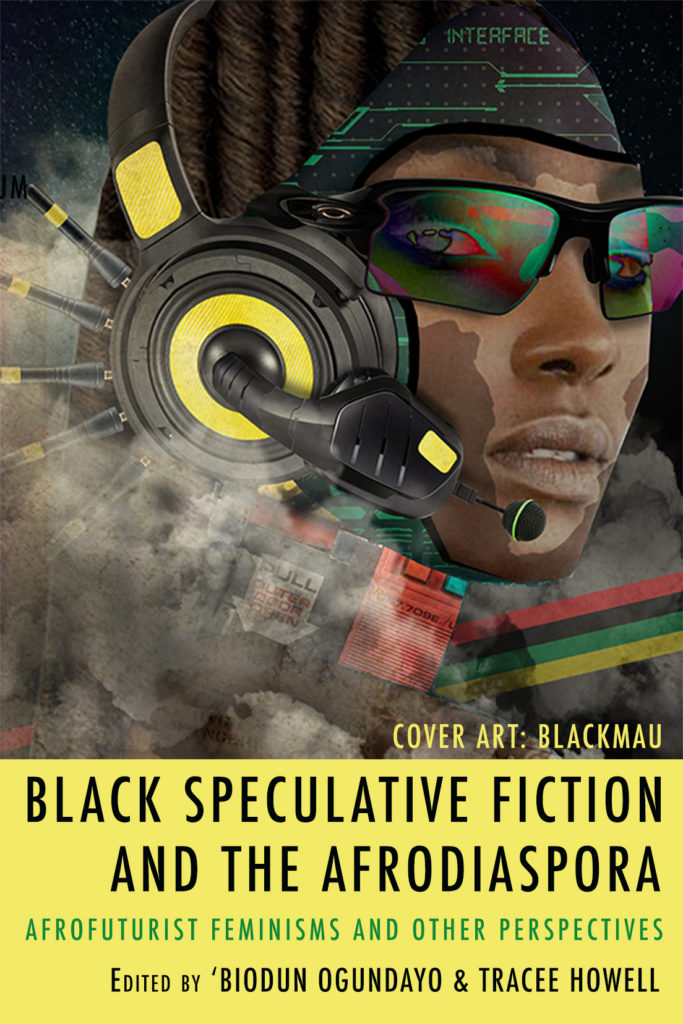
Other Perspectives on Afrofuturism: Interview with the Editors
With this volume coming to fruition, we posed a few questions for its editors, Dr. ‘BioDun Ogundayo and Dr. Tracee Howell.
What does this edited volume explore, in respect to issues and questions around Afrofuturism, feminism, speculative fiction, and other ideas? What interests you in the collection?
‘BioDun Ogundayo: This volume explores themes and theories of Afrofuturism from outside the USA—home of Afrofuturist writings. Essays reflect on a variety of iterations of key Afrofuturism concepts from African, Afro-Caribbean, Afro-Hispanic, and Black feminist perspectives.
Tracee Howell: As ‘BioDun has mentioned, this volume explores how scholars from both within and outside of the United States are engaging with—and expanding upon—contemporary themes and theories of Afrofuturism. As editors, we were especially interested in learning how researchers and teachers might be exploring possible connections among African, Afro-Caribbean, Afro-Hispanic and African-American traditions, mythos and meanings in their work on Black speculative fiction. I’m incredibly excited by the amount of work we received that offers feminist readings and scholarship in response to our call. In fact, what I’ve learned throughout the process of putting this collection together—and what will most impact my own future work and teaching—is truly how bountiful the connections are between contemporary Black feminist perspectives and current works of Afrofuturism, Africanfuturism, and Black speculative fiction in general.
How did you come to Afrofuturism, Black speculative approaches, fiction, arts, in your life and work?
‘BioDun: Teaching African, African American, and Caribbean literature and cinema, interacting with, and mentoring Black youth from across the world. I was struck by the connections between modern African, Afro-Caribbean, and African American literary and spiritual traditions and practices. I then revisited Pan-Africanism as a concept and practice, and it became clear to me that Afrofuturism is a re-imagining, in a more contemporary way, of the epistemolog(ies) of Pan-Africanism that culminate in positive and empowering visions of Global Blackness across all media and art forms. Simply put, and to paraphrase Aimé Césaire, Afrofuturism and Black speculative fiction are a project (globally) to restore Blackness, and to promote Black humanity, especially given the 500-year history of slavery, colonization, and white supremacy. These have consistently denied Black agency; thus, Afrofuturism is ideologically an activist response, or counter-narrative expressed locally but globally relevant and interconnected.
Tracee: In the much same way I came to the study of all literature—I’m a voracious reader. Aren’t we all? In the last, say six or seven years, especially as an American, I’ve been taking solace in science and speculative fiction, re-reading Octavia Butler, and finding my way to N.K. Jemison, and musically/visually, Janelle Monáe. Then, in 2017, several of my colleagues and I arranged for Nnedi Okorafor to come and speak at our campus the following year. In addition to her talk, she very graciously visited my American literature class, and even had dinner with our students, during which she hinted at further adventure for Binti, and discussed TV, film, and graphic novel work in process. She was just terrific and so incredibly generous, and my students were completely dazzled, as were we all. As for me, by the time of her visit I’d already fallen head over heels for Binti, both as a reader and a teacher. I’d inserted the novella into my reading list that semester in honor of her visit, and discovered that its impact was especially significant for first-generation students, who wrote that they were able to see themselves in the character. At dinner with Nnedi Okorafor, to hear those students shyly tell her how personally meaningful they found this story to be, that reading Binti helped them to feel more comfortable on campus—this was one of those all too rare moments of connection that I think we all hope for as college professors. That night I began developing our campus’ first course in Afrofuturism and US literature. Its offering attracted the attention of my friend and colleague ‘BioDun Ogundayo, who oversees our program in Africana Studies, and we began talking about Afrofuturism as an interdisciplinary aesthetic phenomenon, which led to our decision to do an edited collection.
What does Afrofuturism mean to you, as arts, aesthetics, but also praxis, politics, epistemology, in our contemporary moment?
‘BioDun: Afrofuturism to me is the endless opportunities to reaffirm, reshape, (even contest or problematize aspects of Blackness) using the greatest tool that guarantees Black survival: the mind—the capacity to imagine, and then create and recreate, even rearrange aspects of our collective experience to tell the world, in the eternal words of Maya Angelou: “And Still I Rise”. Afrofuturism to me means that Black people, just like our Jewish kin, are always ennobled by soul-killing hate and suffering. Afrofuturism to me is the Middle Passage as the umbilical cord between our glorious past, our unbearable present, and our optimism against dark energies that seek, like in the past, to deny and destroy Blackness. Afrofuturism is the amulet, the talisman, the compass for the Afropolitan and the Afro-optimist against white supremacy, against social death. Afrofuturism, whether as praxis, theory, or aesthetics is not to replace white supremacy with Black supremacy. It is our power to remember, imagine, and create our future, for us, by ourselves. For me, it is remembering with humility and compassion. It is Black anamnesis in opposition to diabolic amnesia.
Tracee: In part, this question is something I explore in my essay within the collection, and of course, the answer for me continues to evolve. But in general, as a literary scholar and teacher rooted in feminism and anti-racism, I see potential for Afrofuturism to help intensify the (too) gradual transformation of the academy away from the sole privileging of white, male Enlightenment perspectives, practices, and processes. As a white academic myself, at the same time I also worry about the whitewashing of Afrofuturism, and a superficial or performative use by white scholars and the primarily white academy. But the time for significant change in the American University is long overdue; we’ve most definitely centered white experience long enough.
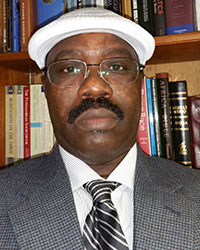
Dr. ’BioDun J. Ogundayo is Director of Africana Studies and Associate Professor of French and Comparative Literature at the University of Pittsburgh-Bradford. His latest book, African Sacred Spaces, co-edited with Julius Adekunle, was published by Lexington Press in 2019. He has published essays on slave narratives, African politics, translation theory and practice, Yoruba and African spirituality. His poetry has been published by Daraja Press, Ottawa, and the African American Review. He is fluent in Yoruba (his native tongue), French, English, and Hausa, and holds reading fluency in Spanish, Italian, and some Ghanaian languages.

Dr. Tracee Howell is Assistant Professor of English at the University of Pittsburgh-Bradford. With a background in philosophy and critical theory, Dr. Howell’s scholarly interests include the study of narrative as well as cultural, gender, and media studies. She is strongly committed to anti-racist, intersectional teaching through courses in American literature, Afrofuturism, film, Shakespeare, and gender, sexuality, and women’s studies. She is Program Coordinator for Gender, Sexuality and Women’s Studies, and Director of the Composition Program and Writing Center.
The post <strong>Interview with the Editors:</strong> Black Speculative Fiction & the Afrodiaspora <em>(forthcoming 2022)</em>
appeared first on .
The post <strong>Decolonising the Imaginary:</strong> Interview with <strong>BLACKMAU</strong>’s Stacey Robinson
appeared first on .
. . . a fantasy and a high five to those of who grew up looking for something extra in comics and pop culture. . . . [it] is one answer to the question ‘Where are all the black people in comics?’ It’s our attempt to address what could have been. Through established aesthetics and classic comic noir, we deconstruct, recreate, sample, remix and restructure Jack Kirby’s imagery and flip the script on a White dominated culture of “heroarchy.” . . . It’s a challenge to see what lacks in our society and provide solutions.
— Stacey Robinson, in Black Kirby (2013, 8)
tobias c. van Veen: How did you get into comics and graphic novels? What were your primary influences?
Stacey Robinson: My uncle Valiant was a comic collector. He introduced me to the best comics and graphic novels. My earliest comic influences were Keith Pollard’s Spider-Man and Might Thor run, John Byrne’s X-Men and Fantastic Four series, Gil Kane’s Star Hawks, and Mark Bright’s run on Iron Man and Green Lantern to name a few. However, I was always influenced by “fine art” as well. The work of Ernie Barnes and Charles Bibbs still heavily guides my collage and comic work. That’s why I make graphic comic-styled exhibitions in gallery spaces.
Your work often uses found-art, collage, and remixing. What influences your choices of source materials? What remix artists have inspired or guided your work?
I’m deliberately shouting out another fave, Romare Bearden. “Sampling and Remix” is all over my production practice. My chief musical inspiration for the way I collage is undoubtedly J-Dilla. The way he sampled music was the way we made mix tapes back in the day. Hard cuts between syllables were imperfect recording for us as we were trying to catch the song absent the dj talk-overs and commercials. Dilla’s undercurrents of sound resembled layers of recording over old tapes. The palimpsest of sounds added to the uniqueness of the nostalgic experience of listening to Dilla. It’s even clear to me which pieces I made while listening to his music. Robert Rauschenberg and Mark Bradford are other artists whose layering of material comes to mind. As I think about walks through the city, I also appreciate the history of advertising that can be seen from posters being added and removed, only in part to be replaced by others. It creates the design aesthetic of the urban.

Works such as “Herald of the 5th Element” mix together African design and street culture. The piece juxtaposes African American symbols of status and bling such as gold chains and track suits with an African mask motif wrought in neon. Could you describe your intent with the bricolage of elements in this work, and how it perhaps gestures toward the “5th Element”? What does the 5th Element mean to you?
The 5th element in Hip Hop is knowledge of ourselves. Culturally I’m pointing to that in this piece.I’m careful to never just take African artifacts without studying as much as I can before utilizing them. Dressing the African figure in an Adidas track suit and heavy gold chain points directly to B Boy aesthetics. The neon crown is my drawing added to the amalgam of other cultural elements. I like to add my linear aesthetics to my collages as well. The intent is to provoke thought about our African influences in Hip Hop, for example [through] “Call and Response”, or various dances and fighting arts that have influenced break dancing. The Ndebele Tribe’s adorned houses (as seen in Marvel’s The Black Panther movie) are some of my favourite public art works to date.
How would you describe the role of black women in your work? I am thinking of “Cosmic Listening” (2016), for example, which features a black woman with a jetpack and space helmet, Kemetic wings and a seashell above her head. What is at work in this piece? Would you see your work as operating in the realm of black feminism and/or black womanism?
My work is meant to be easily interpreted. I believe our people need art that inspires, yet points to the future while reflecting our powerfully radical past. I think very similarly about Black art as Emory Douglas’ manifesto lays out. With points such as: “Create art that recognizes the oppression of others, and considers basic quality of life concerns and basic human rights issues.” And: “Create art of social concerns that even a child can understand.” Cosmic Listening is about a woman listening to the universe that’s speaking to her mind. The Seashell is a direct shout out to artist Charles White’s work. Her garb is reflective of her readiness to take flight and do as the Commodores said, “fly far away from here.” My work is a bricolaged-sankofarration. I don’t consider feminism in my work. Maybe I’m wrong, but I think Black women can have the space of feminism without Black men operating in it. I’m more concerned about representing Black women well. I was raised by single Black women, I date Black women, and I have several Black women mentors and a Black daughter. I do the best I can to articulate my issues, concerns, and conversation well, while honouring them.

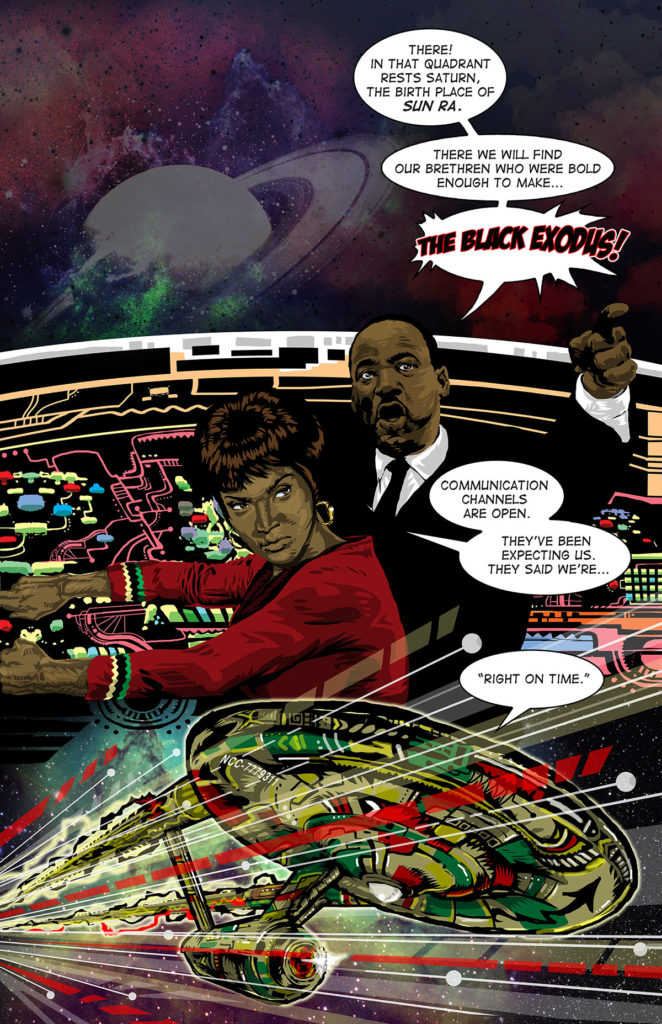
In “Destination Saturn” (2015) multiple science fictional myths fuse into a single image of Black Exodus: the Starship Enterprise becomes the beacon of the interplanetary Black Star Line, piloted by Lt. Uhuru and Dr. Martin Luther King, Jr., as they make their way to the home planet of Sun Ra, Saturn. Tell me a little about the inspiration for “Destination Saturn.”
The inspiration behind “Destination Saturn” comes from my frustrations living in America, where every justice won Black people had to fight for. It also comes from my understanding that White privileges are more important to much of White America than justice, equality and diversity are. The inspiration comes from entertaining ideas of living apart from White people to examine what an uninterrupted space looks like. I wonder where Africa would be without American and European imperialism. What non-genetically modified foods would taste like. What cures would be realized. What Black love and relations would look like outside of White-dominated and distributed pop cultural depictions. I’ve often said that if I encountered a black hole, I’d enter in and leave this wickedness.
In “Destination Saturn” there are several themes at play, starting with the encounter between Nichelle Nichols (Uhuru) and Martin Luther King Jr., the latter who encouraged Nichols to stay with the Star Trek series. But there’s more here: Sun Ra comes into play, as well as The Black Exodus (thinking here of Marcus Garvey and the Black Star Line) and the phrase “Right on Time” (which I read as also referencing the Nation of Islam’s “Nation Time,” as often sampled in Public Enemy…). Can you break this down for the viewer a bit?
You are right on target. I wanted to mix sci-fi, politics and Black nationalism. For Black folks it’s all the same. The intersections are more than less. We’ve always been AfroFuturists. The message is very direct and those key elements to this piece makes this one of my recent favourites. Yes I’m referencing Sun Ra’s Space is the Place (1974). We are headed to Sun Ra’s home planet, a Black marooned people free to explore our understandings without colonial interference. The Garvey inspired Pan-African Black Star Line Ship Enterprise is on its continuing mission to find Black peace and boldly go where very few have gone before. If not for Dr. King, Nichelle Nichols would have left Star Trek, as she had already submitted her resignation letter to Gene Roddenberry. I’m working on my AfroFuturist book where I examine many Black figures who many wouldn’t consider AfroFuturists. Dr. King is among them, partially for this reason. I wasn’t thinking “Nation Time” when referencing “right on time” but I’ll take it. Doesn’t matter to me as long as it leads to “free-dumb.” I was thinking that no matter how late in life we wake up and seek to be free it’s always “right on time.”
What does “Afrofuturism” mean to you, in the context of your work, especially in a piece like “Destination Saturn”?
AfroFuturism is a Black belief system. We gave the world religion, science, technology, philosophy, all this was interconnected into the spiritual beliefs of ancient African people. It was never separated, thus why as I said the intersections are more than they are less. However we must be very serious in thinking to transform the speculative into reality. The actuality of an AfroFuture. Black people have always been here, we will always be here, but in what capacity? White people are landing on comets, colonising Mars, and have always been bold in letting the world know that they are destroying this planet and leaving the remains to mostly poorer people who won’t be going to Mars when they leave Earth. What does “Afrofuturism” mean to me, in the context of my work? It means we need to think about what our future is going to be and take charge of it. Most of our struggles for equality have led to our unravelling as a cohesive people. Integration is my best example. We are still unequal and unfree. Call it AfroFuturism, Pan-Africanism, whatever. Either way true AfroFuturists are thinking beyond the dope beats, cybernetic aesthetics, and speculative fiction that we create and are actualising realistic plans of action for Black people’s survival outside of colonialism. That’s what “Afrofuturism” means to me, in the context of my work.
Do you consider your work Afrofuturist? Do you consider yourself an Afrofuturist?
I do not consider my work Afrofuturist. But I’m not opposed to that labeling. I’m careful to not subscribe to a label. Categories function to be limiting and for Black diasporic culture they really are more Western in concept. Before Mark Dery (1994) defined the phenomena as Afrofuturism, we didn’t need a labeling for what was our lifestyle. Futuristic thought is part of our religion, music, science, etc. That’s ancestral. We brought that from the motherland and it dates back to before there was a Europe. I appreciate Dery’s contribution. My work in relation to his definition centers on what he says “…might, for want of a better term…” I look at the reasons why Black people across the continent are artistically projecting ourselves away from colonial conflicts.
I am interested in how your work draws upon figures of the past that are both fictional and factual — Martin Luther King Jr. and Lt. Uhura for example — as well as technologies old and new, from pyramids to rockets. Would you say that Afrofuturist art often deconstructs boundaries of fact to fiction? How do you see the role of such figures of fact and fiction in your work?
Fact and fiction are often a matter of time. We’ve watched Star Trek technology become outdated in the last 10 years. Yet for thousands of years the mysteries of the pyramids haven’t been made fully available to colonizers. Afrofuturist art does whatever we as Black creators decide it does. It can deconstruct White supremacy and racism, while reinforcing Black nationalism, all while Radicalizing our decolonized Black imagination to visualize ourselves away from colonial influence, all in the same work. I see Black activists and artists in the same role, radicalizing our people’s imagination to foresee a free Black future.
— tobias c. van Veen (@fugitivephilo)
Acknowledgements
This interview is excerpted from “Destination Saturn: Sun Ra’s Afrofuturist Utopias and the Art of Stacey Robinson,” in the “Black Lives, Black Politics, Black Futures” special issue of TOPIA: Canadian Journal of Cultural Studies (2018, 39(1)), edited by tobias c. van Veen and Reynaldo Anderson. An earlier (and much shorter) version of this interview was published at Dismantling the Master’s House (2015). Much thanks to Stacey Robinson for permission to reprint his artwork.
Works Cited
Jennings, John and Stacey Robinson. 2013. Black Kirby. Buffalo: Black Kirby Collective.
The post <strong>Decolonising the Imaginary:</strong> Interview with <strong>BLACKMAU</strong>’s Stacey Robinson
appeared first on .